
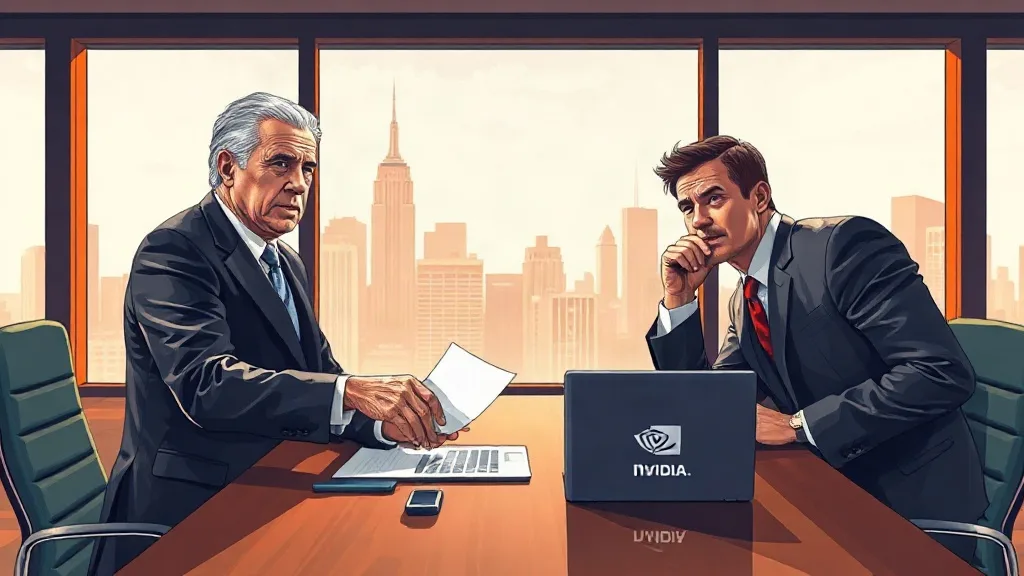
In a surprising turn of events, former President Donald Trump has indicated he would be willing to pardon Nvidia CEO Jensen Huang if the situation ever required it. The comment, reported by the New York Post, came during a broader discussion about Huang's potential testimony before Congress and the legal pressures facing tech leaders. Trump argued that Huang should not have to invoke the Fifth Amendment, suggesting that the Nvidia chief has nothing to hide. While the scenario remains hypothetical, the remark underscores the increasingly tangled relationship between politics, law, and the tech industry.
Context: Why Would Jensen Huang Need a Pardon?
Jensen Huang, the co-founder and CEO of Nvidia, has steered the company to become a dominant force in the semiconductor industry, particularly in graphics processing units (GPUs) that power everything from gaming to artificial intelligence. Under his leadership, Nvidia's market capitalization has soared, making it one of the most valuable companies globally. However, with great success comes scrutiny. Lawmakers and regulators have raised questions about Nvidia's market practices, especially regarding its role in the AI boom and potential antitrust concerns.
While there is no public indication that Huang has been charged with any crime, the possibility of congressional testimony often raises legal risks. Invoking the Fifth Amendment protects individuals from self-incrimination, but it can also carry a public relations cost. Trump's comment suggests that Huang should not need such protection, implying that any investigation into Nvidia or its CEO is politically motivated or unwarranted. This aligns with Trump's broader narrative of defending business leaders against what he portrays as overreach by government agencies.
The Political Calculus Behind Trump's Remarks
Trump's willingness to float a pardon for Huang is not just a legal hypothetical; it's a political signal. By aligning himself with a prominent tech figure, Trump is courting an industry that has become increasingly influential in American politics. Nvidia's technologies are central to the AI revolution, and its CEO is a respected voice in Silicon Valley. Trump's gesture could be seen as an olive branch to tech leaders who might otherwise be wary of his administration's policies.
Moreover, the remark fits into Trump's pattern of using pardons as political tools. During his presidency, he granted clemency to several high-profile figures, often bypassing traditional Justice Department processes. By suggesting a pardon for Huang, Trump is again positioning himself as a champion of business interests against regulatory hurdles. This could resonate with voters who feel that government bureaucracy stifles innovation and entrepreneurship.
Nvidia's Role in the AI Race and Regulatory Landscape
Nvidia's rise has been nothing short of meteoric, driven by the insatiable demand for AI computing power. The company's GPUs are the backbone of large language models like ChatGPT, and its hardware is sought after by tech giants and startups alike. This dominance has not gone unnoticed by regulators. In the United States and abroad, antitrust authorities are examining whether Nvidia's practices stifle competition. The company has also been caught in the crosshairs of export controls, particularly regarding sales to China.
Huang has generally maintained a low political profile, focusing on innovation and business growth. However, as Nvidia's influence expands, so does the likelihood of political and legal challenges. Trump's comment may be a preemptive defense, signaling that he would shield Huang from what he perceives as unfair targeting. It also highlights the growing intersection of national security, technology, and politics, where semiconductor leadership is seen as a strategic imperative.
What This Means for the Tech Industry and Investors
For investors and industry watchers, Trump's remarks add a layer of uncertainty to an already complex regulatory environment. A pardon, even if hypothetical, suggests that legal risks for tech leaders might be mitigated by political intervention. This could embolden companies to push boundaries, knowing that a sympathetic administration might offer protection. On the other hand, it raises questions about accountability and the rule of law, potentially unsettling those who favor a level playing field.
Nvidia's stock has been on a rollercoaster ride, influenced by AI demand, supply chain dynamics, and geopolitical tensions. While Trump's comment is unlikely to move markets immediately, it contributes to the narrative that Nvidia is a political football. Investors should monitor any developments in Washington that could impact the company's operations or legal standing. The intersection of tech and politics is becoming impossible to ignore.
The Broader Implications for Executive Accountability
Trump's suggestion also touches on a fundamental question: should business leaders be shielded from congressional scrutiny? The Fifth Amendment is a constitutional right, but invoking it can be seen as an admission of guilt in the court of public opinion. Trump's argument that Huang shouldn't have to invoke it implies that the allegations or investigations are baseless. This stance could undermine congressional oversight if it becomes a partisan issue. It also sets a precedent where political alliances influence legal outcomes, which critics argue erodes trust in institutions.
At the same time, supporters of Trump's view might argue that overzealous regulators and lawmakers often target successful companies out of envy or for political gain. They see pardons as a check on government overreach. The debate reflects a deeper divide in American politics about the role of government in regulating business and protecting consumers versus fostering innovation.
SSS
Has Jensen Huang been charged with any crime?
There is no public record of Jensen Huang being charged with any crime. The discussion about a pardon appears to be speculative and tied to potential congressional testimony, not an actual legal case.
Why would Trump offer a pardon to a tech CEO?
Trump's offer is likely a political gesture to align with the tech industry and criticize regulatory overreach. It also fits his pattern of using pardons to support business figures and challenge established legal processes.
What does invoking the Fifth Amendment mean for a CEO?
Invoking the Fifth Amendment protects an individual from self-incrimination during testimony. However, it can carry a public relations cost, as it may be interpreted as an admission of wrongdoing, even if legally it is not.
How might this affect Nvidia's business?
In the short term, the comment is unlikely to have a direct impact. But it adds to the political noise around Nvidia, which could influence investor sentiment and regulatory scrutiny in the long run.
Is this a realistic scenario?
It's highly hypothetical. Pardons are typically granted after convictions, and there's no indication Huang is under investigation. Trump's remark is more about political messaging than an imminent legal action.