
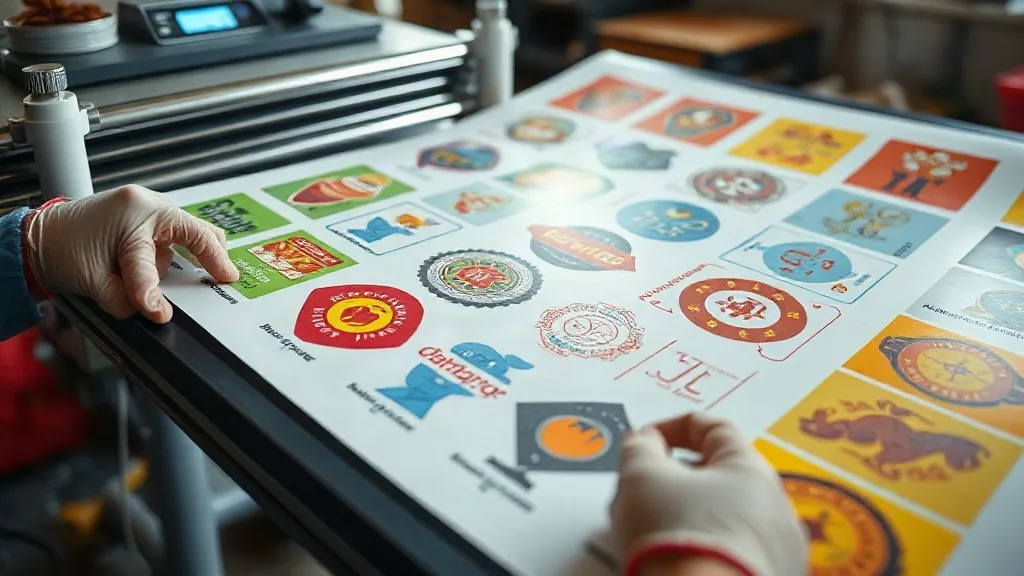
If you run a small apparel brand or print shop, you already know that dtf transfers can be a game-changer. They let you print vibrant, durable designs on demand without the setup costs of screen printing. But here's the catch: many businesses struggle to price their DTF products correctly, leaving money on the table or scaring customers away. In this guide, I'll walk you through the real economics of DTF transfers, from calculating your costs to optimizing gangsheets and setting prices that maximize profit. Whether you're new to dtf or looking to refine your workflow, these insights will help you build a sustainable, profitable operation.
Why Pricing DTF Transfers Is Trickier Than It Looks
At first glance, pricing seems straightforward: add up your material costs, labor, and a markup. But DTF has hidden variables that can eat into your margins if you're not careful. For example, the cost per transfer depends heavily on how efficiently you use your film and powder. A gangsheet that's poorly laid out wastes materials, driving up your cost per print. Similarly, labor time for weeding and pressing varies with design complexity. And let's not forget shipping, packaging, and the occasional misprint. To price accurately, you need to understand your true cost per transfer, not just the sticker price of consumables.
The True Cost Breakdown
Let's break down the costs involved in producing a DTF transfer. You have:
- Film: The PET film you print on. Costs vary by quality and size.
- Ink: DTF inks are not cheap, and consumption depends on design coverage.
- Powder: Adhesive powder, often overlooked but adds up.
- Labor: Printing, powdering, curing, and pressing time.
- Equipment depreciation: Your printer, shaker, and heat press.
- Overhead: Rent, utilities, software, etc.
Many beginners only factor in film and ink, then wonder why they're not profitable. A more accurate approach is to calculate your cost per square inch of film used. For instance, if a roll of film costs $100 and yields 100 square feet, your film cost is $1 per square foot. Add ink and powder costs (say, $0.50 per square foot combined), and you're at $1.50 per square foot. If your design occupies 10 square inches (about 0.07 square feet), the material cost is roughly $0.10. Then add labor: if you pay yourself $20 per hour and can produce 60 transfers per hour, that's $0.33 per transfer. Equipment and overhead might add another $0.10. So your total cost per transfer is about $0.53. This is a simplified example, but it shows why you need to dig deeper than surface-level costs.
Gangsheets: Your Secret Weapon for Lower Costs
A gangsheet is simply a large sheet of film with multiple designs printed on it, maximizing the use of space. The more efficiently you nest designs, the lower your cost per transfer. But building a gangsheet isn't just about cramming as many designs as possible; it's about smart layout. Here are some tips to optimize your gangsheets:
- Group by size: Place smaller designs together to fill gaps.
- Rotate designs: Sometimes rotating a design 90 degrees can save space.
- Use nesting software: Many RIP software options include nesting tools that automatically arrange designs for maximum efficiency.
- Plan for common sizes: If you frequently print 10-inch wide designs, orient your gangsheet to accommodate them without waste.
- Leave a small margin: Don't place designs too close to the edge; you need room for trimming.
A well-optimized gangsheet can reduce film waste by 20-30%, directly boosting your profit margin. Let's say you print a gangsheet that uses 95% of the film area. Your cost per square inch drops significantly compared to a sheet with 70% utilization. Over hundreds of transfers, that adds up to real savings.
How to Calculate Gangsheet Efficiency
To measure your gangsheet efficiency, divide the total area of your designs by the total area of the film used. For example, if you have a 12x12 inch sheet (144 square inches) and your designs cover 120 square inches, your efficiency is 83%. Aim for at least 80% to keep costs low. If you're below that, reconsider your layout or use smaller designs to fill gaps.
Pricing Strategies That Work
Now that you know your costs, how do you set prices? There's no one-size-fits-all answer, but here are some proven strategies:
1. Cost-Plus Pricing
This is the simplest: take your cost per transfer and add a markup. A common markup for custom apparel is 2x to 3x. So if your cost is $0.50, you might charge $1.00 to $1.50 per transfer. But be careful: this method doesn't account for market demand or perceived value. It's a good starting point, but you may need to adjust based on competition and customer willingness to pay.
2. Value-Based Pricing
Consider what the transfer is worth to your customer. If you're selling to a boutique that will resell the shirt for $30, they can afford to pay more for a high-quality transfer. Value-based pricing requires understanding your customer's business model and the perceived quality of your work. For example, if you offer faster turnaround or superior color vibrancy, you can charge a premium.
3. Tiered Pricing
Offer different price points based on size or complexity. For instance, small designs (up to 5 inches) might be $1.50, medium (up to 10 inches) $3.00, and large (up to 12 inches) $4.50. This gives customers options and encourages larger orders. You can also offer discounts for bulk orders or gangsheet sharing.
4. Gangsheet Sharing
If you have customers who only need a few transfers, consider offering gangsheet sharing. You fill a gangsheet with multiple customers' designs and split the cost. This lowers the price per transfer for everyone and increases your throughput. Just be sure to communicate clearly about turnaround times and potential delays.
Real-World Example: From Cost to Profit
Let's put this into practice. Suppose you run a small print shop and a customer orders 50 custom t-shirts with a 10-inch wide logo. You decide to use DTF transfers. First, calculate your cost per transfer:
- Film: $0.15 per transfer (based on 80% gangsheet efficiency)
- Ink: $0.10
- Powder: $0.05
- Labor: $0.30 (printing, powdering, curing)
- Equipment/overhead: $0.10
- Total cost: $0.70 per transfer
Now, if you charge $2.00 per transfer, your profit is $1.30 per transfer, or $65 total. But you also need to press the transfers onto the shirts. If you charge $5.00 per shirt for pressing (including the shirt blank cost?), wait, let's clarify: In this example, we're only pricing the transfer itself. The customer might be applying it themselves or you might be pressing it. If you're pressing, add labor and overhead for that step. Suppose pressing costs you $1.00 per shirt (labor and equipment), and you charge $3.00 for the service. Then your total revenue per shirt is $2.00 (transfer) + $3.00 (pressing) = $5.00, and your total cost is $0.70 + $1.00 = $1.70, leaving a profit of $3.30 per shirt. For 50 shirts, that's $165 profit. Not bad for a few hours of work.
But what if you only charged $1.50 per transfer? Your profit drops to $0.80 per transfer, or $40 total. Still profitable, but less room for error. The key is to know your numbers and not undervalue your work.
Common Pricing Mistakes to Avoid
Even experienced operators fall into these traps:
- Ignoring labor: Your time is money. Don't forget to pay yourself.
- Underestimating waste: Misprints, film jams, and powder waste add up. Factor in a 5-10% waste allowance.
- Not adjusting for complexity: A design with lots of fine details takes longer to weed and may require more careful pressing. Charge accordingly.
- Forgetting shipping and packaging: If you ship transfers, include the cost of mailers, labels, and postage.
- Charging too little to compete: Competing on price alone is a race to the bottom. Focus on quality and service instead.
Scaling Your DTF Business Profitably
Once you've nailed your pricing, you can focus on scaling. Here are some strategies:
- Invest in automation: A shaker machine automates powder application, saving labor and improving consistency.
- Standardize gangsheet templates: Create templates for common design sizes to speed up layout.
- Offer bundle deals: Encourage larger orders with discounts for 10+ transfers.
- Market to local businesses: Many small brands look for dtf transfers near me; optimize your local SEO to capture that demand.
- Track your metrics: Monitor cost per transfer, gangsheet efficiency, and profit margin regularly to identify areas for improvement.
Remember, scaling isn't just about volume; it's about maintaining quality and profitability as you grow. By keeping a close eye on your costs and pricing, you can build a thriving DTF business.
Frequently Asked Questions
How do I calculate the cost per DTF transfer accurately?
Start by determining the cost of film, ink, and powder per square inch. Then add labor (time to print, powder, and cure) and a portion of equipment and overhead costs. Divide total costs by the number of transfers produced. Use a spreadsheet to track and refine your numbers over time.
What's the best way to price DTF transfers for small orders?
For small orders, consider a minimum order fee or slightly higher per-transfer price to cover setup time. You can also offer gangsheet sharing to combine small orders and reduce costs. Communicate clearly that small orders may have longer turnaround times.
How can I reduce waste and improve gangsheet efficiency?
Use nesting software, group similar sizes, and rotate designs to fill gaps. Aim for at least 80% film utilization. Regularly review your layouts and adjust as needed. Also, consider printing common designs in bulk to fill leftover space.
Should I charge separately for pressing transfers onto garments?
Yes, pressing is a separate service that requires labor, equipment, and expertise. Charge a reasonable fee that covers your costs and profit. Many customers are happy to pay for the convenience of receiving finished garments.
How do I compete with other DTF printers on price?
Instead of competing solely on price, differentiate with quality, speed, and customer service. Offer value-added services like design assistance or fast turnaround. Build relationships with customers so they see you as a partner, not just a vendor.